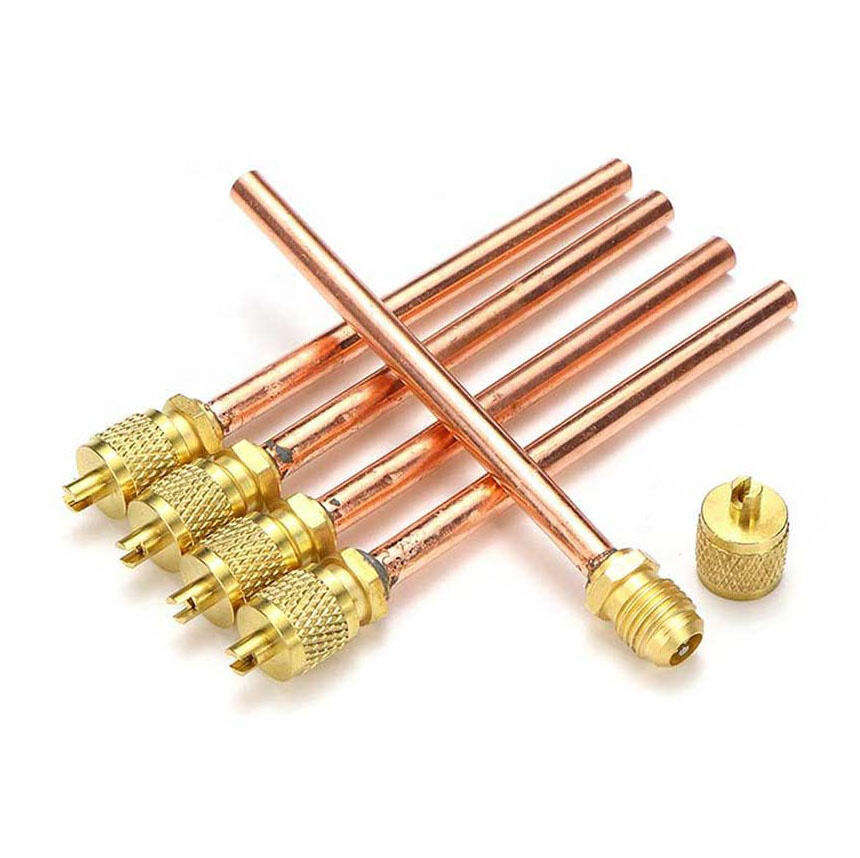
Manual refrigeration access valves serve as critical control points throughout HVAC and refrigeration systems, letting techs regulate and isolate refrigerant flow with precision. When working on specific parts like compressors or evaporators, these valves mean technicians don't have to drain the whole system first. The latest HVAC Maintenance Report from 2023 shows that when these access valves work right, they cut down refrigerant losses during repairs by nearly 92%. What makes these valves so valuable? They keep working even when electronics fail, which is why most shops still rely on them for safe and efficient maintenance practices despite all the fancy digital options available now.
These valves support three critical functions during routine system maintenance:
This functionality is vital for tasks like leak detection, compressor replacement, or seasonal refrigerant adjustments, preserving both system performance and environmental compliance.
A standard manual refrigeration access valve includes:
The quarter-turn design offers a balance between ease of use and secure sealing, ensuring reliable performance across residential and commercial applications.
The two position valves basically work as simple switches turning things on and off, which makes them popular in home split system air conditioners since these units don't need complicated maintenance. Industry reports actually show around 78 percent of these residential systems have this type of valve installed. Now when we look at three position valves, they come with something extra - a special service port that lets technicians check pressures and move refrigerant all at once. This feature really shines in big commercial refrigeration setups where people need to keep an eye on things constantly and perform regular maintenance checks throughout the day.
Ball type manual access valves work with a simple 90 degree turn to shut things off quickly, which is really important safety wise in places handling ammonia for industrial refrigeration. The full bore design means there's about 30 to maybe even 40 percent less pressure loss than those restricted port valves out there, so they run way better in big cooling systems across factories. Food processors especially benefit from this because when coolant flows consistently through their equipment, it keeps temperatures stable in delicate machinery such as blast chillers that can't handle wild temperature swings.
Choosing the right valve really depends on how complex the system is and what kind of stress it handles day to day. Most homes just need simple two position valves for their basic circuits. But when dealing with those big supermarket refrigeration units that have multiple compressors running at once, going for three position models makes much more sense since they handle diagnostics and maintenance work so much better. Anyone working with high pressure CO2 systems above 350 PSIG knows that ball type valves with metal seals last about 2.5 times longer than the brass seated ones we used to rely on. And let's face it, facilities where technicians are constantly opening and closing valves appreciate the durability factor too. Ball valves can take around 50 thousand cycles before needing replacement, which means fewer headaches down the road when budgeting for parts.
Manual access valves function as precision throttling devices, allowing technicians to adjust refrigerant flow within ±2% of target levels (NIST 2023). Integrated gauge ports enable real-time pressure readings, which are essential for identifying blockages, overcharging, or inefficiencies during diagnostic procedures.
Three-position valves allow selective isolation of key components—compressors, condensers, and evaporators—while maintaining overall system vacuum integrity. This targeted approach minimizes downtime and prevents unnecessary refrigerant release, significantly improving safety and environmental compliance.
By enabling sectional isolation, access valves streamline leak detection, helping technicians pinpoint issues up to 40% faster than whole-system testing methods. Their standardized SAE flare connections ensure compatibility with modern recovery equipment, achieving capture rates exceeding 99.9% during decommissioning or retrofit operations.
In supermarket refrigeration, strategic placement of manual access valves at compressor racks and individual display cases allows for component-level servicing without disrupting entire cooling zones. This reduces refrigerant loss by up to 92% during repairs compared to full-system shutdowns (Cold Chain Efficiency Report 2023). Key benefits include:
A 2023 study of 12,000 supermarkets showed optimized valve deployment correlated with an 18% reduction in annual energy consumption due to improved pressure management.
Manual access valves in industrial chillers, including those with three positions and ball designs, play a big role in cutting down on downtime when parts need maintenance. Take chemical processing plants for instance. When things go wrong there, companies lose around $74k every single hour according to Industrial Cooling Analytics from last year. These valves let techs work on heat exchangers, redirect refrigerant flow paths, or even take lubricant samples all while keeping production running normally. Ball valves stand out because they open and close so quickly and reliably, which matters a lot during emergencies when time really counts against the bottom line.
While manual valves remain the standard for mechanical reliability, retrofit solutions now integrate digital monitoring through Bluetooth-enabled gauge adapters. These smart add-ons provide real-time alerts for:
A 2023 analysis of 47 food distribution centers found that pairing traditional valves with predictive monitoring reduced service calls by 67%, extending infrastructure life without replacing existing hardware.
Proper installation and regular maintenance are key to maximizing the lifespan and performance of manual refrigeration access valves. Adhering to manufacturer guidelines, refrigerant compatibility, and torque specifications ensures long-term system integrity.
Use disposable core tools when accessing Schrader-style ports to prevent moisture and particulate ingress. For A2L refrigerants like R-454B, apply thread sealants rated for 500+ PSI. EPA compliance data indicates that 42% of refrigerant leaks stem from improperly seated valve caps—always replace O-rings and inspect seals during reassembly.
| Valve Type | Inspection Interval | Body Nut Torque | Stem Lubricant |
|---|---|---|---|
| Two-Position | Quarterly | 20 ft-lbs | POE Oil |
| Three-Position | Biannually | 24 ft-lbs | PTFE Grease |
Systems adhering to these protocols experienced 63% fewer emergency repairs, according to a 2023 ASHRAE field study. For ball-type valves, perform additional torque checks during seasonal temperature shifts to counteract stress from thermal expansion and contraction.
 EN
EN


 Hot News