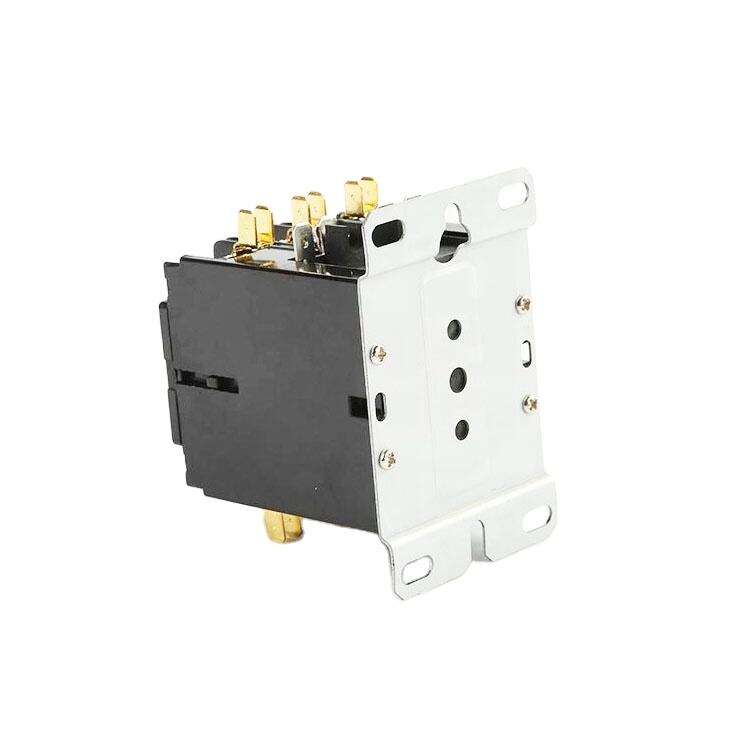
The 5A contactor in an air conditioning system basically works like an electrical switch, connecting power from the breaker panel to those big energy users such as compressors and fan motors. These little workhorses go through around 10 thousand on-off cycles every year in home heating and cooling systems, handling up to 5 amps of current without any noticeable voltage loss along the way. Getting the right size contactor matters a lot because when they're undersized, compressors tend to fail. According to recent data from HVAC technicians in 2023, compressor problems make up about one third of all service call requests. So investing in properly rated contactors isn't just about following specs it actually makes the whole system run better and last longer between breakdowns.
Modern split system air conditioners rely on 5A contactors to manage both compressor starts and fan motor functions. These components feature a dual pole design that can actually handle locked rotor currents reaching around six times what's normally expected. According to field reports from technicians across the industry, when installers use contactors that are correctly sized for the job, there tends to be about a 28 percent drop in motor winding problems compared to those systems where smaller contactors were installed instead. This difference becomes especially noticeable during those stressful moments when the unit first powers on after being off for a while.
These contactors maintain stable power delivery despite frequent cycling from thermostat commands and defrost cycles. Homes with correctly matched contactors experience 17% lower standby power consumption, according to a 2024 energy efficiency study. The devices also disconnect auxiliary loads when idle while preserving capacitor charge for rapid restarts.
Getting the voltage and current ratings right really matters if we want to prevent equipment from failing too soon. According to the Electrical Safety Foundation report from 2023, mismatched specs are actually responsible for around 32% of all HVAC electrical problems. When it comes to residential contactors, they need to handle regular 230 volt operations but also be able to withstand those brief power surges that can reach as high as 265 volts. Most engineers suggest going for components that have a rating about 25% higher than what's normally needed. This extra capacity helps compensate for older wiring systems where resistance tends to creep up over time, which nobody likes dealing with when trying to maintain proper system performance.
The majority of thermostats out there run on 24V control circuits. But here's something interesting: according to the HVAC Tech Journal from last year, about one third of all field problems come down to picking the wrong coil voltage. When someone installs a 24V coil into a 120V system, things can get really hot - literally. We've seen cases where this mistake caused equipment damage and even created serious fire risks. That's why many technicians now recommend low voltage coils ranging between 12 and 30 volts for modern smart HVAC setups. These lower voltage options work much quieter, consume less electricity overall, and just plain play nicer with today's digital control systems. Most installers have noticed these advantages firsthand over the past few years.
Compressor startup generates inrush currents 6—8 times higher than running levels, placing significant stress on contactor contacts. Undersized units suffer 40% faster contact erosion under repeated 40A surges. Selecting contactors with arc-chute technology and silver-cadmium contacts improves durability, with testing confirming performance over 100,000 high-surge cycles.
Residential voltage fluctuations (±10%) require robust operational tolerance. High-quality contactors operate reliably between 180–264V, preventing chatter during brownouts. Third-party evaluations show silver-nickel alloy contacts maintain less than 5mΩ resistance variance across temperatures from -20°C to 85°C, making them ideal for attic-mounted HVAC units exposed to extreme thermal cycling.
The majority of home heating and cooling systems run on what's called IEC AC-3 duty standards for those squirrel cage motors we see everywhere. These account for around 8 out of 10 applications based on recent electromechanical research from last year. Then there's AC-4 duty which deals specifically with motors that need to stop suddenly or change direction, something mostly seen in bigger commercial buildings rather than houses. Getting the wrong kind of contactor mixed up with the load can really mess things up though. Contact welding happens quite often this way. Safety checks have found that roughly one in five installations still gets it wrong, putting AC-3 contacts into situations where they should be using AC-4 instead. It's a common mistake that leads to all sorts of problems down the line.
Compressors present inductive loads with low power factors (0.3–0.5), requiring 3–5 times greater interrupting capacity than resistive loads such as heaters. Modern 5A contactors manage this challenge using arc chutes that suppress disengagement voltages exceeding 1.2kV, protecting downstream components.
AC-3 contactors are designed to handle six times their rated current for 100ms during normal startups. In contrast, AC-4 applications involve more severe conditions, including tenfold inrush currents during reversal. Thermal modeling indicates AC-4 cycling reduces contact life by 37% compared to AC-3 when operated 50 times daily.
An analysis of 120 failed HVAC contactors revealed that 68% involved AC-4 applications where standard AC-3-rated units were improperly installed. These failures occurred at an average of 23,456 cycles—42% below the manufacturer’s 40,000-cycle rating for correctly specified models. Cross-industry evidence confirms oversized contactors last 2.3 times longer in high-demand reversing systems.
When working in environments above 60 degrees Celsius (around 140 Fahrenheit), 5 amp contactors face serious thermal challenges over time. Tests show that contactors equipped with silver nickel composite contacts can keep their electrical resistance stable through about 100 thousand operation cycles at 7 amps, even when exposed to constant heat. This kind of durability helps prevent damage caused by repeated heating and cooling cycles, which is why these contactors perform so well in industrial systems that run between eight to twelve hours each day without significant issues.
Switching back and forth wears things down faster mainly because of three things happening at once. First there's arcing when connections break apart, then comes oxidation caused by all that heat building up over time, and finally we get this uneven transfer of materials between contacts. The good news is newer equipment actually fights off these problems pretty well. Manufacturers have started using special arc suppression chambers, applied those silver-cadmium oxide coatings which can handle temperatures around 300 degrees Celsius, and redesigned components with crossbars so wear gets spread out more evenly across surfaces. According to lab testing results, all these improvements cut down on contact welding incidents quite significantly compared to older versions - about two thirds fewer cases actually.
To optimize longevity and performance, engineers balance key design parameters:
| Design Parameter | Performance Target | Lifespan Impact |
|---|---|---|
| Contact Pressure | ⓟ₎⠀410B7a03d300g to ensure low resistance | Higher pressure accelerates spring fatigue |
| Material Thickness | 1.2mm minimum for arc resistance | Thicker materials reduce thermal stress |
| Coil Insulation | Class F (155°C) rating | Prevents insulation breakdown during surges |
This balanced approach enables 5A contactors to achieve 10–15 year service lives while safely managing 500% inrush currents.
Choosing the right 5A contactor directly influences HVAC efficiency, safety, and maintenance frequency. Given that HVAC systems consume 48% of residential energy (EIA 2023), proper component selection has measurable impact.
Size contactors to carry 125% of the full-load current to accommodate startup surges and thermal effects. Match coil voltage precisely to the control circuit—typically 24V or 120V—and select NEMA 4-rated enclosures for outdoor installations. In coastal areas, opt for corrosion-resistant alloys like silver nickel to extend service life.
Modern units incorporate magnetic blowouts to extinguish arcs during disconnection, reducing contact erosion by 60%. Double-insulated coils prevent leakage in humid conditions, and tin-plated terminals retain conductivity through 100,000+ thermal cycles, ensuring long-term reliability.
Modular contactors offer tool-free coil replacement and occupy 30% less space, making them well-suited for compact heat pumps and retrofits. Traditional integrally molded designs remain favored in industrial chillers due to superior vibration and temperature resilience across -40°C to 85°C ranges.
IoT-enabled contactors now provide real-time monitoring of contact wear, coil health, and temperature trends. Early adopters report 23% fewer emergency repairs by enabling predictive maintenance. These smart units integrate with building automation systems to optimize compressor cycling and reduce energy consumption.
Implementation Checklist
 EN
EN


 Hot News