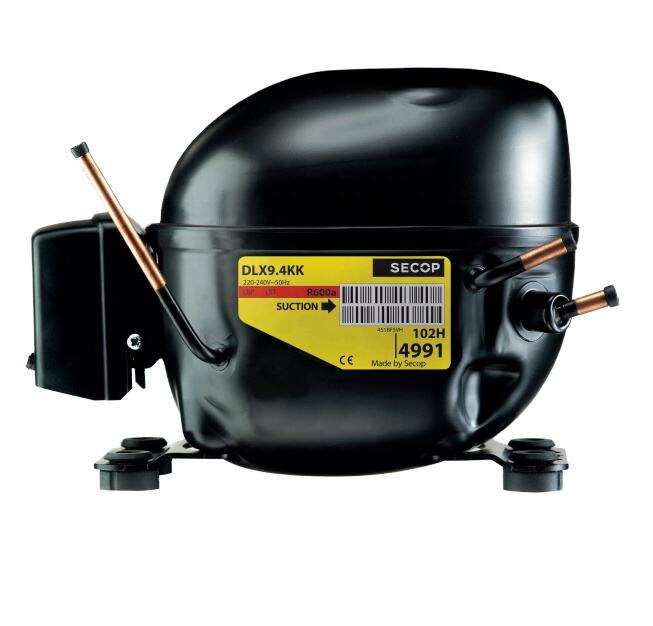
The R600a hermetic compressor actually works with isobutane, which happens to be a type of hydrocarbon refrigerant that doesn't harm the ozone layer at all since it has zero ODP. And here's something interesting about its GWP rating: only 3 compared to those old school refrigerants like R134a, which makes it around 99% better for the environment. Switching away from these chlorine based stuff helps protect our atmosphere from both ozone destruction and excessive warming effects. When manufacturers replace R134a (which has a whopping GWP of 1430) with R600a in home fridges, each unit ends up cutting down carbon dioxide equivalents by roughly 1.2 tons every year according to some recent studies looking into environmental impacts. That kind of reduction really adds up across millions of appliances worldwide.
When comparing R600a to R134a, there's no question which one comes out on top when looking at environmental impact and how well it works in practice. Systems using R600a need about 20 to 30 percent less refrigerant to get the same cooling power because of better volumetric efficiency. That means fewer chances of leaks happening and less direct emissions into the atmosphere. Various independent studies have found that appliances running on R600a consume around 18% less energy when dealing with similar workloads, so they're greener while still performing just as good. Because of this improved efficiency, many places including the EU are moving away from R134a pretty quickly these days. The F-Gas regulations there basically require all new equipment to stay under a global warming potential threshold of 150, which makes R600a the obvious choice for manufacturers wanting to comply with current standards.
Policy makers and various industry groups have been pushing for wider acceptance of R600a across different sectors. Take for instance the U.S. Environmental Protection Agency's SNAP Program which supports hydrocarbon refrigerants, while China has its own GB standards backing similar approaches. These programs highlight how hydrocarbons produce roughly half to three quarters fewer emissions over their entire life cycle when compared to those synthetic options still commonly used today. Looking at market trends, most new fridge models coming off European production lines these days actually contain R600a compressors inside them. This shift towards greener technology is happening because companies need to meet environmental regulations and also because consumers increasingly want appliances that don't harm the planet as much as traditional ones do.
R600a hermetic compressors deliver a 15% higher Coefficient of Performance (COP) than R134a systems, according to a 2024 study on vapor-compression cycles. This improvement stems from R600a’s superior thermodynamic properties, enabling faster cooling with less energy input.
Efficiency gains come from redesigned components:
These innovations cut idle power consumption by 20% compared to previous-generation models.
Field studies of ENERGY STAR-certified refrigerators show R600a systems consume 127 kWh/year, versus 158 kWh/year for R134a units—a 19.6% reduction that translates to $23 in annual savings per appliance. This advantage scales in commercial settings, where continuous operation amplifies cost and energy benefits.
R600a hermetic compressors deliver measurable performance improvements through optimized engineering, achieving reliability standards that surpass older refrigerant systems.
R600a’s thermodynamic advantages enable faster temperature recovery and ±0.5°C stability in refrigerators, even during frequent door openings—a 24% improvement over R134a systems. These compressors maintain consistent output across an 85% wider ambient temperature range (10°C to 43°C) without overload, reducing maintenance needs by up to 30%.
Operational noise averages 32 dB(A) in R600a refrigerators—quieter than a typical library (40 dB). Vibration-dampening hermetic seals and refined motor windings suppress audible frequencies in the 200–800 Hz range, meeting IEC 60704-1 noise standards for household appliances.
With 20% higher latent heat capacity than R134a, R600a enables faster heat absorption in evaporators while keeping discharge temperatures below 65°C. This thermal stability supports continuous operation beyond 15 hours without efficiency loss, a key benefit validated in recent system studies.
The impressive cooling power of R600a means good performance even when there's not much refrigerant around. One company actually tested this out and saw something interesting happen when they switched to 4mm copper tubing instead of bigger ones. Their tests showed that R600a usage dropped by about 30%, but everything still worked fine temperature-wise. This cut down on what they had to spend on materials too, plus made things safer for the environment. For regular home appliances, these systems need only between 50 and 70 grams of refrigerant to run properly. Recent testing in labs has backed up these findings, showing that smaller amounts really do work without compromising efficiency.
| Application | Typical R600a Charge | Equivalent R134a Charge |
|---|---|---|
| Household units | 50–70 g | 100–150 g |
| Commercial systems | 200–300 g | 400–600 g |
Household refrigerators use 50% less refrigerant than R134a systems, leveraging R600a’s density and efficiency. Commercial systems require more charge but still use significantly less than conventional alternatives, making R600a scalable across applications without compromising performance.
According to Future Market Insights from 2023, around 78% of household fridges across Europe run on R600a hermetic compressors. These systems are pretty much the gold standard because they work so efficiently while being kinder to the environment. The compact nature of these compressors makes them ideal for those tricky spaces like under counter freezers or complex multi door fridge setups. Major appliance brands have actually seen their energy bills drop by about 19% when switching from older R134a models. What really sets R600a apart though is its impressive latent heat capacity which clocks in at roughly 68% better than R134a. This means manufacturers can get away with using much smaller refrigerant charges sometimes as little as under 150 grams even in large 400 liter home units. Pretty remarkable when considering how much space and weight that saves.
We're seeing more supermarkets and cold storage warehouses switch to R600a systems these days. The numbers back this up too installation rates have been climbing about 14 percent each year according to Future Market Insights projections going into 2026. When it comes to actual testing results, the medium temperature display cases using R600a consume around 23% less electricity annually compared to their older R404A counterparts. And let's not forget about those vertical multi deck coolers either they manage an impressive oil return rate above 98%, which means these units can run reliably even when needed constantly like in convenience stores where drinks need chilling all day long or in pharmacies storing sensitive medications that require consistent temperatures.
Compressors using R600a usually need displacement volumes about 20 to 30 percent bigger compared to R134a units because their vapor density is roughly half what it is for R134a. But there's a way around this issue when manufacturers optimize the valve plate design. These improvements cut down on suction gas superheat by somewhere between six and eight degrees Celsius, which helps close the performance gap quite a bit. When looking at variable speed models specifically, the better coefficient of performance (COP) with R600a means we can actually get away with smaller motors. For instance, many 120 watt R600a compressors deliver similar cooling capacity as what would normally come from a 150 watt R134a unit.
 EN
EN


 Hot News