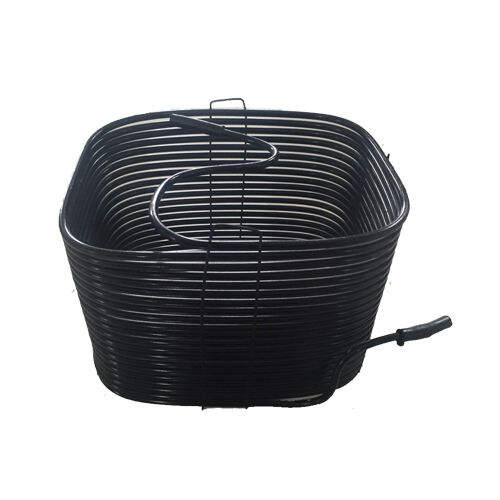
The condenser in a refrigerator plays a vital role as the main part where heat gets dumped out of the cooling system. It works by getting rid of all that warmth collected from inside the fridge space. When we talk specifically about copper fridge condensers, those coils made from copper do a great job moving heat away from the pressurized refrigerant vapor into whatever surrounds the appliance. As the refrigerant goes through this change from gas back to liquid form, it completes the whole cooling cycle, keeping things nice and cold inside. If this didn't happen properly, all that extra heat would just build up inside the system, leading to problems like the fridge not cooling at all and eventually damaging the compressor over time.
When rejecting heat, copper fridge condensers help refrigerant vapor turn back into liquid after it gives up the heat it absorbed. This happens because warm refrigerant moves through those copper coils and meets cooler air or water on the other side. What's interesting is that during this phase change, about 80% of all the heat in the system gets released. Once this happens, the now-cooled refrigerant can head back to the evaporator to start absorbing heat again. Copper works so well here because it conducts heat really efficiently at around 401 W/m·K. Systems using copper tend to run about 30% better than ones made with other materials, which makes a big difference over time especially in commercial refrigeration setups where every bit of efficiency counts.
While often confused, these terms describe distinct components:
This distinction matters for maintenance and replacement decisions, as condenser coils account for 60% of heat transfer efficiency in refrigeration systems according to HVAC industry standards.
Copper fridge condensers utilize three primary cooling methodologies, each with distinct operational frameworks:
| Type | Cooling Medium | Efficiency | Best For |
|---|---|---|---|
| Air-cooled | Ambient air | Moderate | Homes, small businesses |
| Water-cooled | Circulated water | High | Industrial facilities |
| Evaporative | Air + water spray | High (arid) | Hot climates, large systems |
Where copper condensers are installed makes a big difference in how well they work. Air cooled versions tend to lose around 15 to 20 percent of their cooling power when temperatures stay above 95 degrees Fahrenheit for long periods. Evaporative coolers perform much better in these hot dry areas because they use the natural process of evaporation to keep things cool. Water cooled systems have different problems though. In places with hard water, minerals build up on the surfaces over time, which cuts down on efficiency and means more regular cleaning and repairs. For coastal locations, special copper alloys that resist corrosion become necessary since salt in the air can really eat away at standard materials. Cities often need quieter models too, especially near residential areas where noise regulations require sound levels to stay under 45 decibels.
Accurate sizing of your copper fridge condenser prevents energy waste and operational issues. Key factors include:
Undersizing causes constant operation and premature failure, while oversized units short-cycle, increasing humidity by 30% and wasting energy. Calculate total heat load using:Total BTU = (Room Area × 25) + (Window Area × 1,000) + Equipment Heat Output
| Factor | Impact on Cooling Load | Key Consideration |
|---|---|---|
| Room Dimensions | Directly proportional | Measure length/width precisely |
| Insulation Quality | 15–25% variance | Upgrade to R-30 where possible |
| Occupancy/Usage | 500 BTU per person | Track peak occupancy hours |
| Refrigerant Type | Affects heat transfer | Match to compressor specs |
The updated SEER2 (Seasonal Energy Efficiency Ratio) standard, mandated since 2023, provides realistic efficiency measurements under varying conditions. Key insights:
System optimization requires pairing your copper fridge condenser with compatible components:
Prioritize units with ENERGY STAR® certification, which exceed federal standards by 15% and typically deliver payback within 2–3 years through operational savings.
Copper condensers do come with a price tag about 20 to 30 percent higher than aluminum ones, but they conduct heat much better which cuts down on energy usage somewhere around 12 to 18 percent each year. Most businesses find that these savings start paying off the extra upfront cost within three to five years of operation. Another big plus is how resistant copper is to corrosion. In real world commercial settings, this means equipment lasts well past fifteen years before needing replacement. When looking at long term costs, many facility managers actually prefer copper even though it costs more initially because the total lifetime expenses end up being lower.
Condenser noise directly impacts user experience, with residential environments requiring <45 dB—comparable to library quiet. Commercial kitchens tolerate up to 60 dB, but strategic placement remains critical. Rotary-scroll compressors paired with variable-speed fans achieve 38–42 dB operation, while improper installation can amplify vibrations by 40% according to acoustic studies.
As the industry moves away from high-GWP refrigerants, copper stands out because of how stable it stays chemically. Refrigerants like R32 with GWP 675 and R454B at around 466 are becoming the go-to options for new systems, cutting down on environmental damage compared to older stuff like R404A by nearly three quarters. Copper works well with these newer, somewhat flammable refrigerants without breaking down over time, unlike aluminum which can degrade. Still important though are things like keeping refrigerant charges within safe limits and regularly checking for leaks according to the latest ASHRAE guidelines from 2022. These practices help ensure safety while making the most of modern refrigeration technology.
 EN
EN


 Hot News