 EN
EN

Choosing the Best Air Conditioning Unit Tape for Durability: A Guide from Experience, Expertise, and Trusted Sources
As an HVAC (Heating, Ventilation, and Air Conditioning) technician with over a decade of experience in installation and maintenance, I've handled projects involving dozens of brands and have seen countless major problems arise from something as small as the wrong tape.
Last summer, I was called to service a long-time client in Guangzhou. His experience left a strong impression on me: the pipes on his balcony air conditioner were leaking, causing the wall to become damp and moldy. Standard tape would curl up at the edges as soon as it was exposed to the sun—completely useless. In a pinch, he wrapped it with some household aluminum foil tape. Three days later, it was still bone dry. This small incident served as a powerful reminder: Choosing the right wrapping tape is often more important than spending more money on better equipment.
In this article, drawing on my own practical experience and referencing authoritative standards and expert opinions, I will provide a comprehensive guide to selecting the most durable air conditioning unit tape.
1. Why is Wrapping Tape So Important?
Many homeowners often overlook the "tape" covering the air conditioning copper pipes, viewing it as merely decorative. In reality, air conditioning pipe wrapping tape serves three core missions:
-
Thermal Insulation: It maintains the optimal temperature of the refrigerant, reducing the compressor's workload. High-quality insulation materials can significantly improve system energy efficiency and lower electricity bills.
-
Condensation Prevention: In humid environments, without an effective moisture barrier, the surface of refrigerant lines can generate significant condensation. This not only wastes energy but can also damage walls and promote mold growth.
-
Physical Protection: It shields the inner insulation foam and copper pipes from UV radiation, rain, wind, and mechanical wear.
The cost of using the wrong tape is high. I've seen too many cases where using standard electrical tape or low-quality plastic wrap led to degraded insulation foam, exposed copper pipes, and eventually, refrigerant leaks.
2. In-Depth Analysis of Four Main Types of Wrapping Tape (Including Practical Comparisons)
Based on my hands-on experience, the most common types of air conditioner wrapping tape on the market today fall into four main categories, each with its own strengths and weaknesses.
1. Closed-Cell Foam Insulation Tape
This is the most common type, typically made from polyethylene or EPDM (ethylene propylene diene monomer) rubber foam.
-
Advantages: Excellent thermal insulation properties. The closed-cell structure effectively blocks moisture vapor, preventing condensation. It's soft and easy to wrap around bends and irregular joints.
-
Disadvantages: Susceptible to sunlight. Standard foam tape degrades, becomes brittle, and turns to powder quickly under direct UV exposure. Therefore, it's best suited for indoor use or completely shaded piping.
-
Practical Experience: When wrapping pipes behind an indoor unit, I prefer this type of foam tape because it conforms tightly to the wall, preventing air gaps.
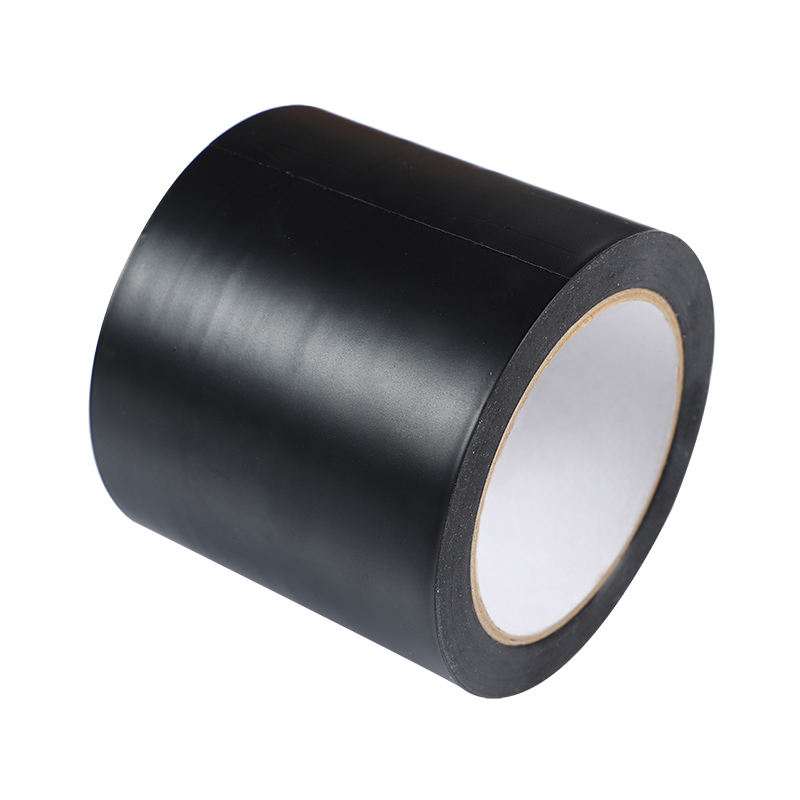
2. Vinyl (PVC) Pipe Wrapping Tape
This is currently the most common "universal" tape on the market. High-quality versions, like specialized HVAC tapes, are made from flexible SPVC (special polyvinyl chloride) and formulated with UV inhibitors.
-
Advantages: Durable, waterproof, and resistant to chemicals. High-quality PVC tape (e.g., with a thickness of around 5 mils) offers good tensile strength. It's typically used as an outer protective layer.
-
Disadvantages: It has virtually no insulating properties on its own and must be wrapped over insulated pipes.
-
Expert Opinion: MRCOOL, a well-known HVAC manufacturer, explicitly states that you must use tape specifically designed for outdoor exposure with UV and moisture resistance. Standard PVC electrical tape is absolutely not suitable.
3. Aluminum Foil / Mylar Reflective Tape
This tape features a metallized coating, giving it a shiny, silver appearance.
-
Advantages: Can reflect up to 97% of radiant heat. It's very lightweight, resistant to abrasion and chemicals.
-
Disadvantages: It does not provide thermal insulation by itself and must be used in conjunction with foam insulation. Additionally, it often requires an air gap to function optimally as a radiant barrier.
-
Case Study: The reason my client in Guangzhou was successful with 50mm aluminum foil tape was that the specific product he used was a "fiberglass cloth reinforced" aluminum foil tape. This composite structure combines the waterproof and reflective properties of aluminum with the tensile strength of fiberglass cloth, making it highly effective for outdoor emergency repairs.
4. Self-Adhering (Self-Fusing) Rubber Tape
This type of tape bonds to itself when stretched and wrapped, without needing any adhesive.
-
Advantages: Forms a completely waterproof, airtight seal and leaves no sticky residue upon removal. It's ideal for sealing complex joints and irregular shapes.
-
Disadvantages: Installation requires some skill (proper stretching is key), and it's generally more expensive.
-
Practical Experience: When dealing with irregular components like branch joints or valves, I often start with a base layer of self-fusing tape to ensure an absolute seal, then reinforce it with an outer layer of PVC tape. User experiences shared online confirm this: strong adhesion without leaving residue, UV and freeze resistant, suitable for all seasons.
Performance Comparison Quick Reference Table
| Type | Insulation Performance | Weather Resistance (UV) | Primary Use | My Rating (Out of 5 Stars) |
|---|---|---|---|---|
| Foam Insulation Tape | ★★★★★ | ★☆☆☆☆ | Indoor pipes, insulation base layer | ★★★☆☆ |
| PVC Vinyl Tape | ★☆☆☆☆ | ★★★★★ | Outdoor pipes, outer protection | ★★★★☆ |
| Aluminum Foil/Fiberglass Tape | ★★☆☆☆ | ★★★★★ | Outdoor, high-heat areas, emergency repair | ★★★★☆ |
| Self-Fusing Rubber Tape | ★★★☆☆ | ★★★★☆ | Joint sealing, irregular shapes | ★★★★☆ |
3. Authoritative Standards: How to Identify "Truly" Durable Outdoor Tape?
As a professional, I don't just rely on manufacturer claims. To ensure a tape is genuinely durable, you need to look for adherence to specific authoritative standards and specifications.
1. UL 181 Certification
This is a standard from Underwriters Laboratories (UL) for materials used in HVAC systems, widely considered the "gold standard" in the industry.
-
UL 181A-P: Pertains to factory-made rigid fiberglass duct board and metal ducts. Tape for this purpose is typically aluminum foil-based with a release liner, featuring very aggressive adhesion, and usually requires a minimum width (e.g., 2.5 inches).
-
UL 181B-FX: Applies to flexible air ducts. Tapes can be foil, film, or cloth-based.
-
Buying Advice: If you see the UL 181 mark on a product, it means the tape has passed rigorous tests for fire resistance, mold resistance, pressure, and aging, making it suitable for permanent installations.
2. Temperature Range
All high-performance tapes will specify their operating temperature range.
-
Standard Requirement: -20°F to 140°F (approximately -29°C to 60°C).
-
Wide-Range Requirement: High-quality all-weather tapes can handle from -40°C to 100°C (-40°F to 212°F), or even -50°C to 150°C (-58°F to 302°F).
3. Thickness and Tensile Strength
-
Thickness: For PVC tape, 5 mils or more is generally considered a durable specification. Tapes that are too thin (e.g., 2-3 mils) tear easily and will likely become brittle outdoors within a year.
-
Tensile Strength: Measured in lbs/in (pounds per inch). A higher value indicates better resistance to pulling and tearing. A value like 13 lbs/in (common for quality tapes like the Piedmont National VP 410) is a good benchmark.
4. Installation Details and Durability: 90% of People Don't Know These Taping Techniques
Choosing the right tape is only half the battle. Incorrect installation can ruin even the most expensive materials.
1. Winding Overlap: The 50% Rule
Do not leave gaps! When wrapping the pipes, each turn of the tape should overlap the previous turn by 50% . This creates a double-layer barrier, effectively blocking moisture intrusion.
2. Surface Preparation is Paramount
"The surface must be clean and dry" — this is a golden rule emphasized by virtually all authoritative sources. New copper pipes may have oil residue, and old pipes will have dust. Wiping the surface clean with alcohol before wrapping can increase adhesion dramatically.
3. Working in Tight Spaces
Working in tight spaces like ceilings or pipe chases can be tricky. A professional tip: use tape with a split-release liner. You can peel back part of the liner, attach the tape, get it positioned correctly, and then peel away the rest of the liner to press it down firmly. This prevents the tape from folding over and sticking to itself, which causes waste.
4. The Final Step: Burnishing
Regardless of the tape used, a crucial final step is to firmly rub down the entire wrapped surface with a rubber squeegee or a dry cloth. This forces out any trapped air bubbles and allows the adhesive to fully wet out the surface, creating the strongest possible bond.
5. Expert Recommendation: My "Gold Standard" Combination
If a client asks me for the ultimate in durability, I recommend a "double-layer composite" strategy:
-
Inner Layer: High-quality closed-cell foam insulation tape or EPDM rubber tape. Ensure the thickness is at least 1/8 inch (approximately 3mm). For hot, humid climates, even thicker is better. This layer handles insulation and condensation prevention.
-
Outer Layer: High-grade aluminum foil/fiberglass cloth tape or all-weather PVC wrapping tape. This layer provides UV resistance, waterproofing, and physical protection.
While this solution has a slightly higher initial cost, its lifespan is often more than three times that of a single-layer wrap and can significantly reduce energy consumption over time.
Summary
Choosing air conditioning wrapping tape is essentially a game of "material science" versus "environmental challenges." Don't blindly trust "original" labels, and don't be tempted by cheap prices. By remembering the following points, you can make an informed choice:
-
Assess the Environment: Use foam tape indoors, composite or PVC tape outdoors.
-
Check for Standards: Look for authoritative certifications like UL 181.
-
Evaluate the Material: Ensure adequate thickness, a flexible feel, and appropriate tackiness.
-
Prioritize Proper Installation: Use the 50% overlap rule, clean the surface, and burnish the final wrap.
As MRCOOL officially reminds users: Using inferior, non-specialized tape can not only lead to energy loss and condensation but could also cause system damage and potentially affect your warranty. I hope my experience and this guide help you "wrap up" an efficient and durable air conditioning system.
Table of Contents
- Choosing the Best Air Conditioning Unit Tape for Durability: A Guide from Experience, Expertise, and Trusted Sources
- 1. Why is Wrapping Tape So Important?
- 2. In-Depth Analysis of Four Main Types of Wrapping Tape (Including Practical Comparisons)
- 3. Authoritative Standards: How to Identify "Truly" Durable Outdoor Tape?
- 4. Installation Details and Durability: 90% of People Don't Know These Taping Techniques
- 5. Expert Recommendation: My "Gold Standard" Combination
- Summary