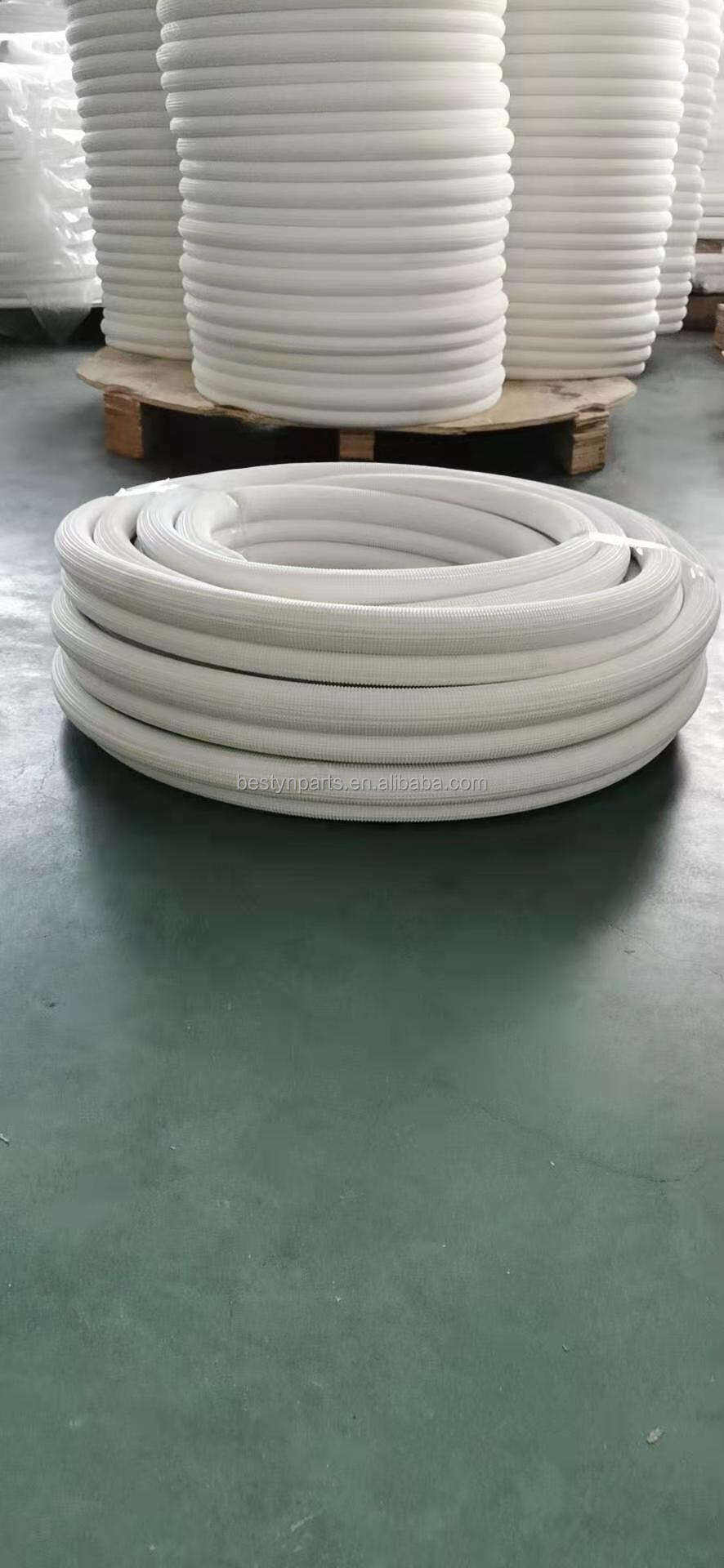
PVC insulation pipes for air conditioning play a really important role in today's HVAC systems because they're light weight yet tough enough to last years without corroding. These pipes do several things at once actually - they keep refrigerant lines warm, shield ducts from damage, and stop annoying condensation problems. What makes them work so well is this special closed cell structure inside that stops heat from escaping through the walls. The result? Systems lose about 30 percent less energy when compared to setups without proper insulation. That means buildings stay cooler longer whether it's a home or office environment, which saves money on electricity bills too.
When AC pipes aren't insulated, they tend to sweat and develop condensation problems. This isn't just an annoyance either it actually leads to mold growing on surfaces, damages building structures over time, and makes the whole cooling system work harder than necessary. PVC insulation stops all that mess by keeping those pipe surfaces warm enough so condensation never forms in the first place. Think of it like wrapping your pipes in a thermal blanket against the dampness. A recent study from the HVAC Efficiency Report back in 2024 found that good insulation cuts down on repair bills related to humidity issues by almost half in places with lots of moisture in the air. For folks living in hot humid regions, this kind of protection becomes absolutely essential, particularly when dealing with hidden pipe runs inside walls or down in damp basement areas where water damage could be catastrophic if left unchecked.
PVC insulation really helps extend how long HVAC systems last because it keeps pipes safe from those annoying temperature changes and all sorts of environmental problems. The material resists chemicals pretty well too, so it doesn't break down when exposed to refrigerant oils or various cleaning products that might be used around the system. Plus, PVC stays flexible enough to handle when things expand due to heat without actually cracking apart. When systems are properly insulated, the compressor doesn't have to work as hard all the time. This means there's just less general wear on everything inside, which tends to push back maintenance needs anywhere from three to five years longer than usual, though this can vary quite a bit based on exactly how much the system gets used day to day.
PVC insulation for air conditioning systems holds up really well against acids, alkalis and those pesky salts that tend to build up in HVAC condensate over time. Regular metals just fall apart when they get wet because they rust, but PVC stays put thanks to how it's chemically put together. Some folks did a big study back in 2024 looking at old installations from 35 years ago and found that these PVC materials still held their strength and kept sealing properly, even near the coast where there's lots of salt in the air. That kind of durability is why so many engineers specify PVC for systems dealing with refrigerants or all that water dripping off condensers.
PVC performs much better than metal or other porous materials in those really humid areas where the air is constantly damp, around 70 to 90% relative humidity. The fact that it's not porous means mold and bacteria don't grow on it as easily, which makes all the difference in places like tropical climates where everything tends to get moldy. Foam and rubber insulation just soak up water over time, but PVC stays dry so the insulation keeps working properly without letting heat escape. Some recent industry research from last year showed something pretty impressive too - when used in these conditions, PVC insulation cut down maintenance expenses by nearly two thirds compared to regular galvanized steel options. Makes sense why so many contractors are switching to it now.
PVC works great for most standard HVAC jobs but it does have its temperature limitations. Most modern versions can handle up to around 70 degrees Celsius or about 158 degrees Fahrenheit, which makes them work well for regular air conditioning discharge lines. But don't try using them in those high heat situations like solar cooling systems where temps often go above 80 degrees. When dealing with such hot environments, technicians usually need to switch to something else entirely. Materials such as ceramic fiber or rubber insulation tend to perform better under extreme conditions. And remember folks, always check what the manufacturer says about their product specs versus what actually happens in the field. Otherwise we might end up with softened pipes or worse yet, deformed components that fail completely during operation.
Selecting the correct insulation thickness is crucial for maximizing thermal efficiency. Industry data shows that thicker insulation significantly reduces heat gain, particularly in high-ambient environments:
| Insulation Thickness | Heat Gain Reduction | Application Scenario |
|---|---|---|
| 6 mm | 35% | Small-diameter pipes (<25 mm) |
| 10 mm | 60% | Medium HVAC systems |
| 15 mm | 85% | Large commercial installations |
Undersized insulation increases energy loss by 18–22% in tropical climates, per 2023 HVAC thermal performance studies. To ensure optimal performance, match insulation thickness to your system’s BTU/hr load using manufacturer charts.
Accurate measurement ensures seamless integration with existing HVAC components. Key factors include:
A 2023 field study revealed that mismatched insulation accounted for 41% of efficiency drops in retrofit projects. Flexible PVC variants with memory foam backing can adapt to older copper lines while maintaining airtight seals.
Thermal bridging—caused by gaps in insulation—impacts nearly 27% of poorly installed AC systems. To minimize heat transfer:
Advanced PVC products now feature tapered ends and compression-fit collars, reducing thermal leakage by 92% compared to traditional cut-to-fit methods in humid regions.
HVAC systems typically use three main types of pipe insulation:
In tropical regions like Southeast Asia, PVC outperforms rubber by resisting fungal growth and maintaining effectiveness at 94% humidity levels. For budget-conscious installations, PVC costs $0.50–$1.20 per linear foot—35–60% less than rubber—while still meeting ASHRAE standards for condensation control. Over a 10-year period, maintenance costs are 70% lower than foam alternatives.
PVC insulation can last anywhere from 50 to 100 years when used in standard AC setups, which means it outlasts foam based materials by about three times their usual lifespan. The material's stable molecular structure helps avoid the kind of cracking problems that affect around 23 percent of rubber insulated pipes within just five years of installation, as reported by ASHRAE back in 2023. Another big plus is how PVC gets rid of those pesky thermal bridging issues that plague metal systems so much. This actually cuts down on energy losses between 12 and 18 percent in commercial cooling applications across the board.
PVC works best at temperatures under 60 degrees Celsius or 140 Fahrenheit. That makes it pretty much useless for those hot industrial exhaust systems where folks typically go with calcium silicate or fiberglass instead. When left out in the sun too long, PVC breaks down much quicker than chlorinated rubber coatings do. We've seen some outdoor condensers literally fall apart after just a couple years because of this problem. For anyone working on equipment that faces harsh weather or extreme heat, grabbing a good material selection chart from the manufacturer should be step one in the design process. These charts list all sorts of important details about how different materials hold up over time.
Studies from the HVAC industry in 2023 show that PVC insulation can cut down thermal energy losses by around 30% when compared to uninsulated pipes. The material has pretty good insulating properties too, with a thermal conductivity rating of about 0.19 W/mK. What does this mean practically? Well, it stops so much heat from escaping or entering the system, keeping those refrigerants at stable temperatures throughout their journey. And guess what happens next? The compressors don't need to kick in as often anymore. For businesses running large cooling systems, this translates into real savings over time. We're talking somewhere between 12% to almost 18% less energy used every year across commercial operations.
Properly insulated PVC pipes improve compressor efficiency by 22% in tropical climates, according to a 2024 energy optimization report. Facilities using 1.5"–3" PVC insulation typically recoup material costs within 18–24 months through:
| Energy Savings Factor | Average Reduction |
|---|---|
| Peak cooling demand | 15–20% |
| Compressor runtime | 25–30% |
| Monthly kWh consumption | 220–300 kWh |
The closed-cell structure of PVC insulation provides 94% vapor resistance, preventing moisture buildup even at 85% relative humidity. Lab tests show this design eliminates 92% of condensation-related energy losses—significantly outperforming open-cell alternatives, which manage only 78%.
A 2022 retrofit project in Southeast Asia reduced HVAC-related mold incidents by 98% after switching to PVC insulation. The material’s non-porous surface minimized microbial risks by:
These results support smart building research indicating that temperature-stable insulation improves HVAC reliability in high-humidity regions.
 EN
EN


 Hot News