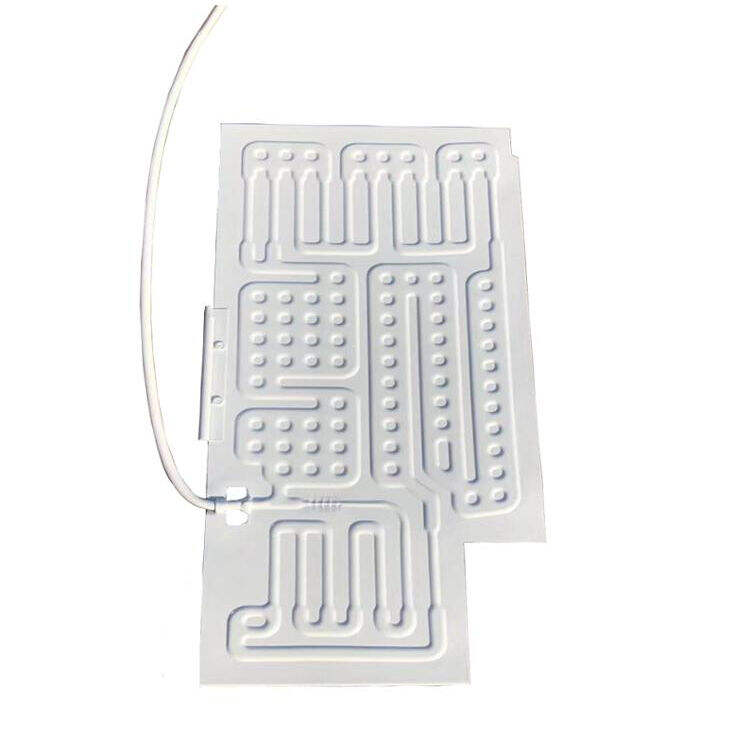
The evaporator inside a fridge works as the main part where heat gets transferred out. Basically, it takes in warmth from inside the refrigerator by turning liquid refrigerant into gas form. According to recent studies, around 62 percent of all the heat removed from a fridge actually happens through this process in frost free models. The way these evaporators are designed with coils helps them touch more of the warm air inside, which makes cooling work better and keeps ice build up at bay in newer frost free appliances. This design feature explains why modern refrigerators don't need manual defrosting like older ones did.
The way refrigerants evaporate depends heavily on something called latent heat absorption. Take R-600a for instance, just one gram of this stuff will pull in about 386 joules worth of energy when changing from liquid to gas state according to research published by IIR back in 2022. What happens next is pretty interesting too. When the low pressure refrigerant makes its way into the evaporator coil, it does so at temps around 15 to maybe even 25 degrees Fahrenheit colder than whatever temperature we're trying to achieve overall. This temperature difference lets the system grab heat out of spaces where things might be getting down near forty degrees or lower. Some recent work coming out of material science labs in 2023 showed that tweaking how these refrigerants are formulated could actually boost their ability to move heat around by nearly a third, which would make a big difference in real world applications.
How we regulate pressure has a major impact on how efficiently evaporation works in these systems. When technicians drop the evaporator pressure down from around 45 psi to about 22 psi, something interesting happens the refrigerant actually boils at a lower temperature, roughly 27 degrees Fahrenheit cooler. This means it can absorb heat much faster, as noted in the HVAC Tech Journal back in 2023. These days, most frost free systems rely on those fancy electronic expansion valves to keep pressure levels just right. They manage to hold temperatures steady within half a degree Fahrenheit even when the system is running at full capacity. And this kind of tight control makes all the difference because it stops liquid refrigerant from getting into the compressor where it could cause serious mechanical problems over time.
Today's frost free evaporators come equipped with microchannel aluminum coils along with some pretty clever geometric designs that really improve how they transfer heat. Research shows these new setups cut down on ice build up around 60 percent better than old fashioned fin and tube systems. A study published back in 2019 by Soylemez and colleagues looked into this using those fancy computer simulations called CFD. What makes them even smarter now is the inclusion of humidity sensors that actually know when to start a defrost cycle instead of running unnecessarily all the time. This saves quite a bit of energy without letting the temperature swing too much, keeping things stable within about half a degree Celsius either way.
When we increase the evaporator surface area by around 30 to 40 percent through corrugated design features, it actually boosts thermal exchange because it creates more turbulence in how the refrigerant flows. Now looking at material choices, copper aluminum hybrids are showing about 18 percent better heat transfer compared to regular single metal options. This works well since copper conducts heat really fast at about 401 watts per meter Kelvin, while aluminum stands up better to corrosion issues. Computer simulations called computational fluid dynamics have shown that all these improvements cut down on compressor workloads by roughly 22 percent for standard frost free refrigerator models. That kind of efficiency makes a real difference in both performance and energy costs over time.
When fans are placed in multiple directions, they help spread air evenly over evaporator surfaces. Keeping the air moving at around 2 to 3 meters per second makes things cool down about 15% quicker and stops hot spots from forming in different areas. Fans with curved blades driven by those new EC motors actually cut power usage by roughly 35% when compared to regular axial fans. A recent study on airflow improvements from HyCold Tech back this up, showing these efficient designs make a real difference in energy savings for cooling systems.
Refrigerators with dual evaporator systems can control each compartment separately, so the freezer stays around -18 degrees Celsius while the fridge remains at about 4 degrees. This setup stops moisture from moving between sections. The result? Colder areas maintain low humidity below 50%, whereas vegetable drawers keep it nice and moist at 85 to 90%. These appliances also run their compressors less often, cutting down on cycles by roughly 40%. According to Albert Lee's research from last year, people who store food in these kinds of fridges notice fruits and veggies stay fresh for an extra week or so compared to regular models. That makes sense when we think about how important proper humidity really is for keeping produce from going bad too quickly.

Modern evaporators depend on precise refrigerant control to maximize cooling performance and energy efficiency. Advanced engineering balances thermal output with power consumption, reducing waste and prolonging system life.
Expansion valves act as precision regulators, controlling refrigerant flow into evaporator coils. They lower pressure and transform high-pressure liquid into a low-pressure mix of liquid and vapor. Thermostatic expansion valves (TXVs) dynamically adjust flow based on real-time evaporator conditions, ensuring consistent refrigerant delivery despite fluctuating cooling demands.
Refrigerant starvation—leading to uneven cooling and compressor stress—is prevented using electronic metering devices. These systems monitor evaporator conditions and modulate flow with ±3% accuracy, according to the 2024 Industrial Refrigeration Report. By avoiding both underfeeding and overfeeding, they improve reliability, extend evaporator lifespan, and reduce energy losses.
Optimized refrigerant distribution ensures even heat absorption across evaporator surfaces. Dual-path designs separate refrigerant streams for fresh food and freezer zones, reducing temperature variation by up to 40% compared to single-path systems. This targeted flow control allows frostfree evaporators to sustain consistent temperatures while consuming 15-20% less energy than conventional models.
Frostfree evaporators account for up to 40% of a refrigerator’s total energy use by governing heat transfer rates. Inefficient operation forces compressors into longer run cycles, increasing power consumption by 18–25% (Green Design Consulting 2024). High-performance evaporators minimize thermal resistance, enabling rapid phase changes that ease compressor demand.
Household refrigerators are evaluated using two key metrics:
A 2024 study revealed dual-evaporator systems save 240 kWh annually compared to single-evaporator units. Independent cooling circuits enabled tighter humidity control in fresh food sections while improving freezer efficiency by 7.2% (2024 Dual-Evaporator Study, ScienceDirect).
Emerging systems employ infrared sensors and AI algorithms to adjust refrigerant flow in real time. One prototype reduced defrost cycles by 63% by detecting door openings and ambient humidity shifts, lowering auxiliary energy use by 19%.
Keeping coils clear and maintaining good airflow is really important for getting the most out of an evaporator system. As months go by, dust, dirt, and other stuff from the air builds up on those metal surfaces inside, which can actually cut down on how well they absorb heat by around 17 percent. That's why it makes sense to clean these components every three months using what the manufacturer recommends. Regular cleaning stops those stubborn biofilms from forming and keeps the system running efficiently during those critical phase changes. For modern frost free units, there are several standard maintenance tasks that work best together: brushing away debris from the coils, giving them a good vacuum, and making sure those condensate drains aren't clogged up with gunk.
Early signs of performance decline include:
These symptoms suggest impaired heat transfer and often require professional inspection. Refrigerators without regular maintenance consume 23% more energy than those adhering to preventative care protocols.
Hydrophobic coatings now protect evaporator fins from residue buildup without compromising thermal performance. Lab tests show micro-textured surfaces retain 98% of initial efficiency after five years, compared to 78% for uncoated units. Manufacturers increasingly combine these coatings with biodegradable cleaning agents that break down organic deposits during routine defrost cycles.
The primary function of a refrigerator evaporator is to absorb heat from inside the refrigerator, converting liquid refrigerant into gas, which effectively removes warmth and contributes to cooling.
Modern evaporators enhance efficiency through design innovations like microchannel aluminum coils, electronic expansion valves, and dual-path refrigerant distribution, which optimize heat transfer and reduce energy consumption.
Regular maintenance, including cleaning coils and ensuring proper airflow, is crucial because it prevents dirt buildup that can reduce heat absorption efficiency by around 17%, ensuring the evaporator operates optimally.
A dual-evaporator system allows independent temperature and humidity control in different fridge compartments, maintaining precise conditions and reducing compressor run cycles by approximately 40%.
 EN
EN


 Hot News