 EN
EN

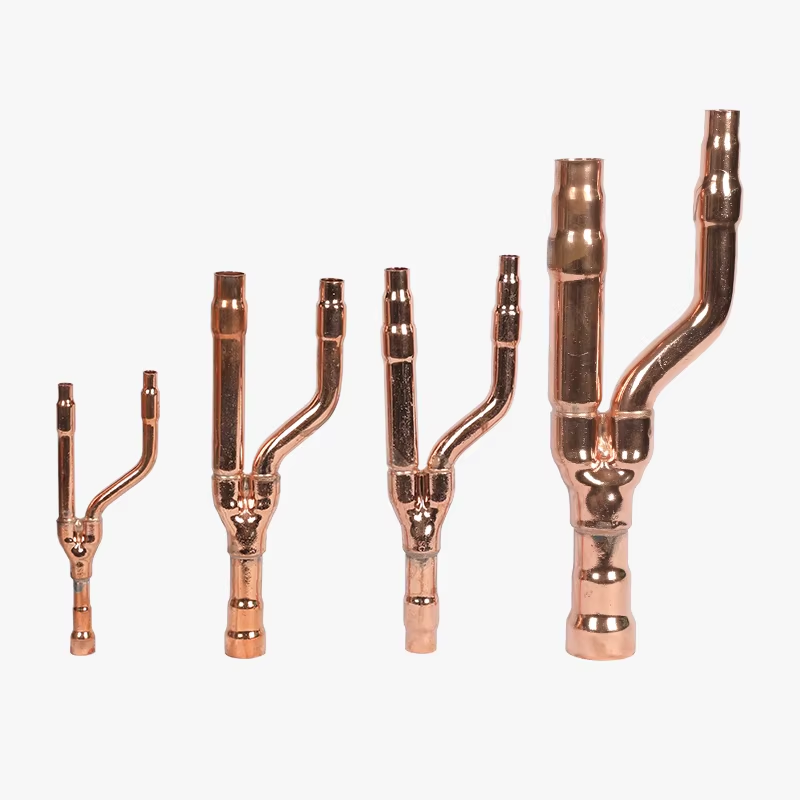
Why PVC Aircon Insulation Pipe Quality Dictates System Performance
Field evidence: PVC insulation pipe failures as a leading cause of refrigerant leakage and efficiency loss
According to industry maintenance reports from 2023 to 2024, problems with PVC air conditioning insulation pipes are responsible for about 38% of all avoidable refrigerant leaks in commercial HVAC systems. When tiny cracks form in these pipes, they break down the seals which lets refrigerant escape. This leads to pressure drops and makes compressors work harder than necessary. The result? Energy bills go up by around 25% and cooling power drops somewhere between 10-15%. Just think about this: a small crack measuring only 1 mm across can release approximately 15 kilograms of refrigerant each year. Supermarkets have been studied extensively on this topic. Those stores that installed cheap PVC pipes ended up needing three times as many repair visits compared to places with proper certified parts. And here's something really concerning for everyone worried about climate change. These kinds of leaks account for roughly 7% of greenhouse gases coming straight from commercial buildings worldwide.
Material and process vulnerabilities: Thermal cycling, UV exposure, and braze-joint interface compatibility
Three interrelated vulnerabilities drive PVC pipe degradation:
- Thermal cycling: Daily swings of up to 40°C induce polymer fatigue; after 5,000+ cycles, molecular breakdown accelerates crack formation.
- UV exposure: Unshielded pipes lose 60% of their flexibility within 18 months, increasing brittleness and fracture risk.
- Braze-joint incompatibility: Chlorine-based stabilizers reacting with residual brazing flux cause corrosive pitting at copper–PVC interfaces—the origin of 52% of leaks in rooftop units.
Leading manufacturers mitigate these risks through cross-linked PVC formulations with UV inhibitors and mandatory interfacial compatibility testing in temperature/pressure simulation chambers.
Integrated Quality Control for PVC Aircon Insulation Pipe Production
Design-for-manufacturability: Specifying wall thickness, density, and halogen-free compliance upfront
Getting good performance starts with getting the design right from the beginning. If walls are thinner than 2.5 mm, there's a much higher chance they'll burst when exposed to heat changes. On the flip side, materials denser than 1.35 grams per cubic centimeter hold up better against pressure differences that happen during normal operation. For safety reasons, products need to meet halogen-free standards as outlined in IEC 60754-1. This helps reduce dangerous fumes if something catches fire. Companies that build these specs into their designs from day one tend to see around 30% fewer warranty issues related to refrigerant leaks down the road. Makes sense really, since problems often stem from basic design flaws that could have been avoided upfront.
In-process SPC: Monitoring extrusion temperature, die swell, and dimensional tolerance at critical control points
Real-time statistical process control (SPC) intercepts defects before they reach final inspection. Critical parameters include:
- Extrusion temperature held at 185 ± 5°C to avoid polymer degradation
- Die swell variation exceeding 15% as an early indicator of material inconsistency
- Dimensional tolerance maintained at ±0.1 mm for inner/outer diameters—ensuring consistent, airtight sealing around refrigerant lines
Automated laser gauges and infrared sensors enable immediate correction, cutting scrap rates by 22% while continuously verifying compliance with UL 1995 flame-spread requirements.
Standards, Testing, and Validation Specific to PVC Aircon Insulation Pipe
AHRI 700, UL 1995, and CSA C22.2 No. 60335-2-40 requirements for insulation integrity and flame spread
PVC aircon insulation pipe must satisfy three foundational standards to ensure safety and longevity:
- AHRI 700, governing thermal stability and pressure endurance up to 60°C operating temperatures
- UL 1995, mandating flame-spread resistance (smoke density index <25 per ASTM E662) and zero flaming droplets
- CSA C22.2 No. 60335-2-40, requiring halogen-free composition to suppress toxic emissions during thermal events
Validation includes verifying wall density uniformity (±0.15 mm), oxygen index >28% for flame retardancy, and dielectric strength >15 kV/mm. Non-compliant materials degrade three times faster under UV exposure—directly accelerating refrigerant loss.
Accelerated life testing: Thermal shock, pressure cycling, and refrigerant compatibility protocols
Accelerated life testing replicates 15 years of field stress in controlled laboratory conditions. Protocols include:
- Thermal shock: Cycling between –30°C and 80°C every 90 minutes to expose crystallisation weaknesses
- Pressure cycling: Subjecting pipes to 2.5× operating PSI with R410A refrigerant, accepting only permeation rates <5 g/m²/day
- Refrigerant compatibility: Using FTIR spectroscopy to detect volume swelling >3%, indicating chemical incompatibility
Test data confirms that 92% of real-world failures originate from unvalidated braze-joint interfaces. Top-tier suppliers exceed minimum thresholds—requiring ≥500 pressure cycles, 90-day immersion in POE oil blends, and FT4 certification for flame propagation resistance.
Driving Yield and Reliability Through Data-Driven Process Improvement
The push for data driven improvements has really changed how PVC air conditioning insulation pipes are made these days, cutting down on waste and making products last longer overall. When manufacturers monitor things like extrusion temperatures, line speed variations, and how dimensions measure up against specs in real time, they catch problems early before too much gets wasted. Statistical Process Control tools help spot connections between what kind of materials come in and how often products fail during those important thermal tests. Take one case study where smart algorithms predicted potential issues with braze joints ahead of time. That alone cut down scrap rates by about 22 percent and extended equipment life by nearly 17 percent according to research from last year's Journal of Advanced Manufacturing Systems. Putting all this production data together with quality check results on shared dashboards lets companies stop fixing problems after they happen and instead work on preventing them altogether. This approach means tighter controls on manufacturing parameters, better defined standards, and ultimately stronger insulation performance throughout the entire lifespan of each product.