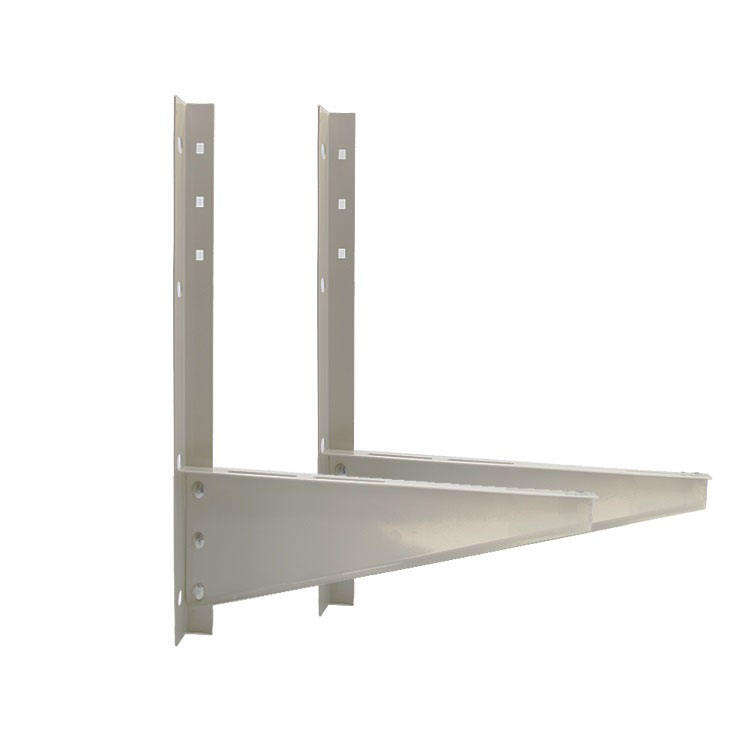
Outdoor unit air conditioning metal stands are the most commonly used type stouds due to their support, convenience in use, and adaptability to construction environment. They include steel, stainless steel and aluminum alloy stands, each with unique properties.
Metal stands are created with carbon steel and receive surface treatments through the use of galvanization and paint to prevent corrosion. Stouds can accommodate units that weigh between 100 and 200 kg. They are ideal for large split type air conditioning and for commercial use. Special galvanised cases have a coating of zinc which offer rust resistant, hence improving the lifespan in outdoor situations. However, the weight of the equipment makes it difficult to install. Also, it can corrode in humid or coastal areas due to the stoud salt spray.
Stainless steel stands are manufactured using type 304 or 316 steel, which provides excellent protection from corrosion. Stainles steel redcues oxidation and rust in extreme south coastal, humid, or highly polluted areas. This is due to the dense layer of oxide film from the chrmoium and nickel content. Like steel, stainless steel has good load-bearing capacity while being lighter than conventional carbon steel. The only downside are the cost which is higher compared to the more traditional options.
Aluminum includes lightweight, corrosion resistance, and strong releaser, This alloy is perfect for small to medium-sized split air conditioners (50-100 kilograms) that are mounted on walls or balconies. The stands are usually anodized, making them more weather and corrosion resistant. Their light weight is beneficial for walls or buildings that are less strong. On the other hand, they do pose a problem, being that they do not support the weight of large or heavy outdoor units.
Concrete stands are constructed out of reinforced concrete and are permanent supporting structures because of their amazing stability and durability. Concrete stands are usually prefabricated or cast on sitting because of the size and weight which is designed to match the outdoor unit of the air conditioning unit.
Concrete stands that are prefabricated are made in the factory, come with standardized sizes and are reinforced with steel bars on the inside. Installation is simple which only requires the concrete stands to be placed on flat surfaces such as rooftops or on the ground. They can also be secured with expansion bolts. These stands have the ability to bear heavy loads which can support heavy commercial air condition units as well as multiple units. Weathering, aging, and corrosion resistant concrete stands are extremely inexpensive because their service life is over 20 years.
For the location and needs of the standing unit, on-site stands are customized. Concrete and steel bars are poured on the location, matching the surface of the installation flawlessly. This type of stand is perfect for free-form space or for space where prefabs cannot be utilized. They are closely tied to the building, eliminating movement or shaking survival even under heavy winds. For on-site casting, consider the factors of time, cost, and the construction skill required, there's a lot become professional and slow.
Stands made of plastic have bases of high-density polyethylene (HDPE) or polypropylene (PP) that are all lightweight, cheap, do not corrode, and have less plastic and more glass. They are designed primarily to support small outdoor units of air conditioners that do not weigh more than 50 kilograms, such as window air conditioning systems or small split systems.
HDPE plastic stands are strong and do not shatter or get damaged from UV rays, and do not get brittle or fade. They are super light, do not corrode in humid places like balconies or Indoors , and are very easy to carry, making them easy to install. PP stands, on the other hand, are used in small air conditioners that are used in houses, as they are more rigid , economical and easier to clean , despite having slightly less impact.
Plastic stands, however, do not have the ability to support oversized or overly heavy outdoor units. They also lose their stability when exposed to high temperatures or direct sunlight for a long time. So they are recommended for temporary constructions.
There are specialized outdoor unit stands designed for certain installations outside which solves issues like space constraints, hostile weather, and noise suppression.
There are stands which are designed for extremely tight installation spaces, for example, for installation on certain walls and small balconies. They have a small, compact structure and can have adjustments in height or width to accommodate various unit sizes. There are certain models which can be described as “slim wall mounted” in that they take few wall space and are designed to give max support.
Noise suppression stands have rubber or spring shock absorbers fitted between the outside unit and the frame of the stand for the outside unit. These lessen the noise of the unit while it is working and minimizes vibration that goes to the structure of the building. This is a means of wall protection as well as much appreciated noise control for the occupants. This is especially useful in residential buildings, hospitals, and offices.
Rooftop mounting stands are for positioning outdoor units on rooftops of structures. Their primary purpose is to lift the outdoor unit above the roof surface for optimal airflow around the unit to allow efficient heat exchange. Rooftop mounting stands are equipped with robust fixing devices that keep the unit stable in case there are strong winds to prevent the unit from blowing over. Some stands have adjustable legs for uneven rooftops to assure stability.
 EN
EN



 Hot News