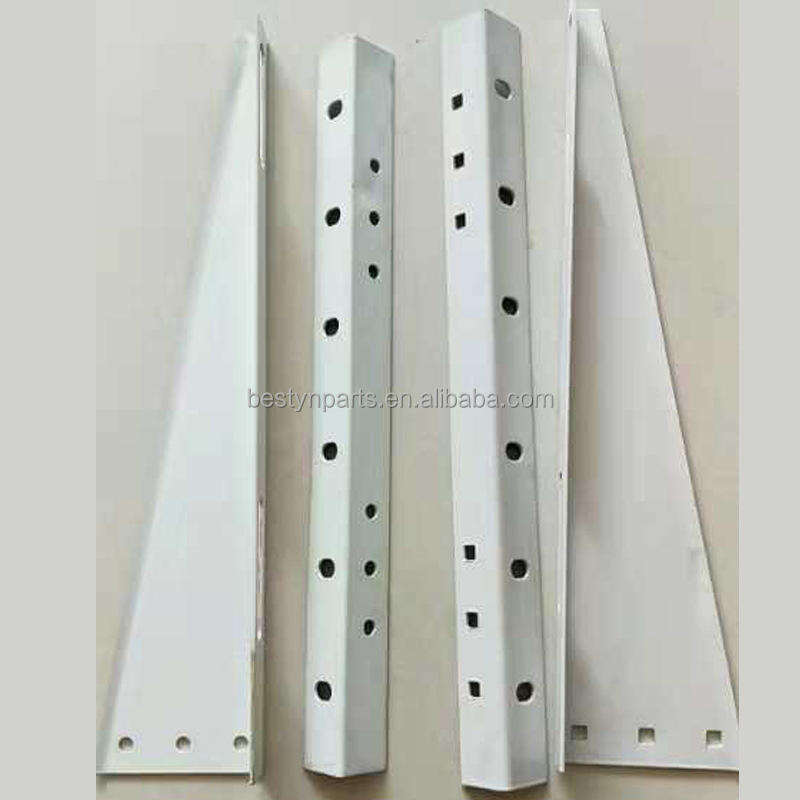
Height adjustable AC stands tackle an important problem in HVAC work when trying to fit equipment into spaces that keep changing over time. These aren't just regular platforms stuck at one level. Installers can actually adjust how high the unit sits even after it's been put in place. This really helps when dealing with old buildings where ceilings might not be flat anymore or when working outside on ground that isn't level. According to research from ASHRAE last year, contractors saved about 37 minutes per job on average when using these adjustable bases instead of having to weld extra pieces or add shims to make things fit right.
The best current designs come with telescoping legs in two stages plus those ratchet mechanisms that really lock into place. They can handle weights as heavy as 1200 pounds yet still keep the height within about 2 millimeters either way. A few versions now have these automatic leveling hydraulics too, which actually adjust themselves when there's slope in the ground, something that becomes super important when setting things up on rooftops where surfaces aren't always flat. Contractors working in commercial HVAC are catching onto this stuff fast. According to ACCA data from last year, we've seen nearly a third more people adopting these newer models compared to just twelve months ago.
Many manufacturers have started adding tool free adjustments and those 360 degree service panels just to make things easier for everyone involved. Take this innovative setup with colored quick release pins for instance they let workers change heights in less than ninety seconds flat while old school bolt systems take forever around fifteen whole minutes sometimes. The maintenance records coming out of those coastal areas in Florida tell another story altogether. These new features cut down on yearly servicing time by roughly twenty two percent because getting at those condenser coils isn't such a nightmare anymore even when dealing with all that salt air corrosion problem that plagues equipment near the ocean.
Sustainability is clearly making waves in the HVAC sector, especially when it comes to materials for those adjustable air conditioning stands we see everywhere these days. Most manufacturers have switched to recycled aluminum for building the main parts. This stuff holds up just as well as new aluminum but requires way less energy to produce something like 90-95% less according to industry reports. Alongside this change, companies are starting to use bioplastics made from plants instead of traditional plastic parts that adjust the stand heights. The good news? When these products reach the end of their life cycle, they actually break down naturally rather than sitting in landfills forever. This approach fits right into what many builders call the circular economy model where resources get reused multiple times before being disposed of completely.
Manufacturers increasingly look at lifecycle assessments when making production choices these days, with a strong focus on how long products last and whether they can be used again. Take those modular AC stands that adjust in height for example they really stand out because people can just rearrange them for different setups. This means they stay useful much longer than regular ones and create less trash overall. Research indicates that these kinds of reusable systems cut down on total carbon footprints quite a bit when compared against one time only options. Companies are getting serious about sustainability too, starting from using old materials right through to setting up programs where customers send back products after use. The goal is simple but powerful create systems where parts keep circulating in the market for years and years rather than ending up in landfills.
AC stands that adjust height actually boost how well compressors work when positioned properly. When these units are lifted about 12 to maybe even 18 inches off the ground, they absorb less heat from their surroundings according to a study in the Industrial Energy Efficiency Report for 2024. Plus, this setup lets air move better around those condenser coils. The positioning also stops dirt and plants from getting stuck there, which matters a lot in places like tropical regions. There microbes tend to build up pretty bad sometimes, messing with heat transfer efficiency by as much as forty percent in some cases.
Key thermal management techniques:
A 2023 HVAC field study showed elevated units achieve 15% faster heat dissipation than ground-mounted systems, correlating to a 9% reduction in compressor runtime.
Strategic vertical placement aligns AC units with natural convection patterns, reducing system strain. Adjustable stands allow installers to position units in low-turbulence zones, decreasing fan motor load by 12–18% annually. Aligning discharge vents perpendicular to prevailing winds cuts backpressure by 27% (ASHRAE Technical Committee 2024).
The latest models come equipped with grilles that have been fine tuned using computational fluid dynamics technology, resulting in smooth laminar airflow for around 94% of installations, which is quite an improvement over the old fixed height units that only managed about 68%. These new designs work especially well when paired with bases that can be tilted forward or backward by about 5 degrees. This feature helps keep those important refrigerant lines at just the right angle, even if the floor isn't perfectly flat. According to some recent research on heat management systems, getting the elevation right can cut down yearly power usage by roughly 3.8 kilowatt hours for every ton of cooling capacity. For businesses running multiple units, this translates into savings of approximately $57 per unit annually across their operations.
For people living in crowded city apartments, foldable AC stands that adjust their height make a big difference when it comes to saving space. The telescoping frames and collapsible parts take up about half the room that regular stands need during storage. Most models come with quick release features so users can adjust the height completely within just a few minutes. This works great for small utility areas or even balconies where every inch counts. What's interesting is how these products fit into what we're seeing across construction industries lately. More manufacturers are focusing on making things that don't waste materials while still being easy to transport and install, which makes sense given today's tight building codes and rising costs.
The tiny apartments in Tokyo, many smaller than 150 square feet, are starting to incorporate these modular air conditioning stands right into their walls. These systems let residents switch things around with the seasons without having to make any major changes to the building itself. Looking across the pond at Barcelona, about four out of five HVAC upgrades in old neighborhoods rely on these adjustable stands. Why? Because they need to maintain proper airflow while keeping those beautiful historic facades intact. According to various urban housing studies, when cities adopt this modular approach in crowded areas, maintenance becomes significantly easier compared to traditional setups. Some data even suggests maintenance gets about a third better access points for technicians working on these systems.
The latest AC stands that adjust their height come equipped with IoT sensors for tracking various parameters like tilt angle with ±0.5 degree accuracy, weight distribution capacity up to around 1200 kilograms, and vibrations across frequencies from 15 to 200 hertz. The continuous stream of real time information makes it possible to spot issues before they cause harm to compressors from things like ground settling, earthquakes, or when units aren't properly leveled on installation day. A major manufacturer released findings last year showing that systems incorporating these smart sensors experienced about a 23 percent drop in warranty cases. This happens because problems get detected earlier and maintenance crews receive advance warnings through predictive alerts sent directly to technicians' devices.
Smart AI systems look at how buildings are shaped, when people actually use different spaces, and local weather conditions to suggest the best possible heights and angles for structures. The technology can tweak elevations anywhere from 50 to 250 millimeters, finding that sweet spot where heat management meets good energy savings. When we check out how these AI recommendations work in real world smart buildings, there's evidence showing around a 14 percent drop in yearly air conditioning expenses for places that mix residential and commercial spaces. This happens because the AI adapts continuously to changing tiny climate zones right outside those windows and doors, something traditional methods just can't match.
Seoul's 2024 smart retrofit initiative deployed 1,200 IoT-enabled height-adjustable AC stands, yielding measurable improvements:
| Metric | Conventional Systems | IoT-Enabled Stands | Improvement |
|---|---|---|---|
| Annual Service Calls | 4.2 | 3.5 | 18% – |
| Energy Consumption | 8,200 kWh | 6,900 kWh | 16% – |
| Maintenance Labor Hours | 45 | 32 | 29% – |
Remote diagnostics and automatic stabilization during typhoon seasons enhanced reliability, particularly in high-rise buildings with complex HVAC demands.
 EN
EN


 Hot News