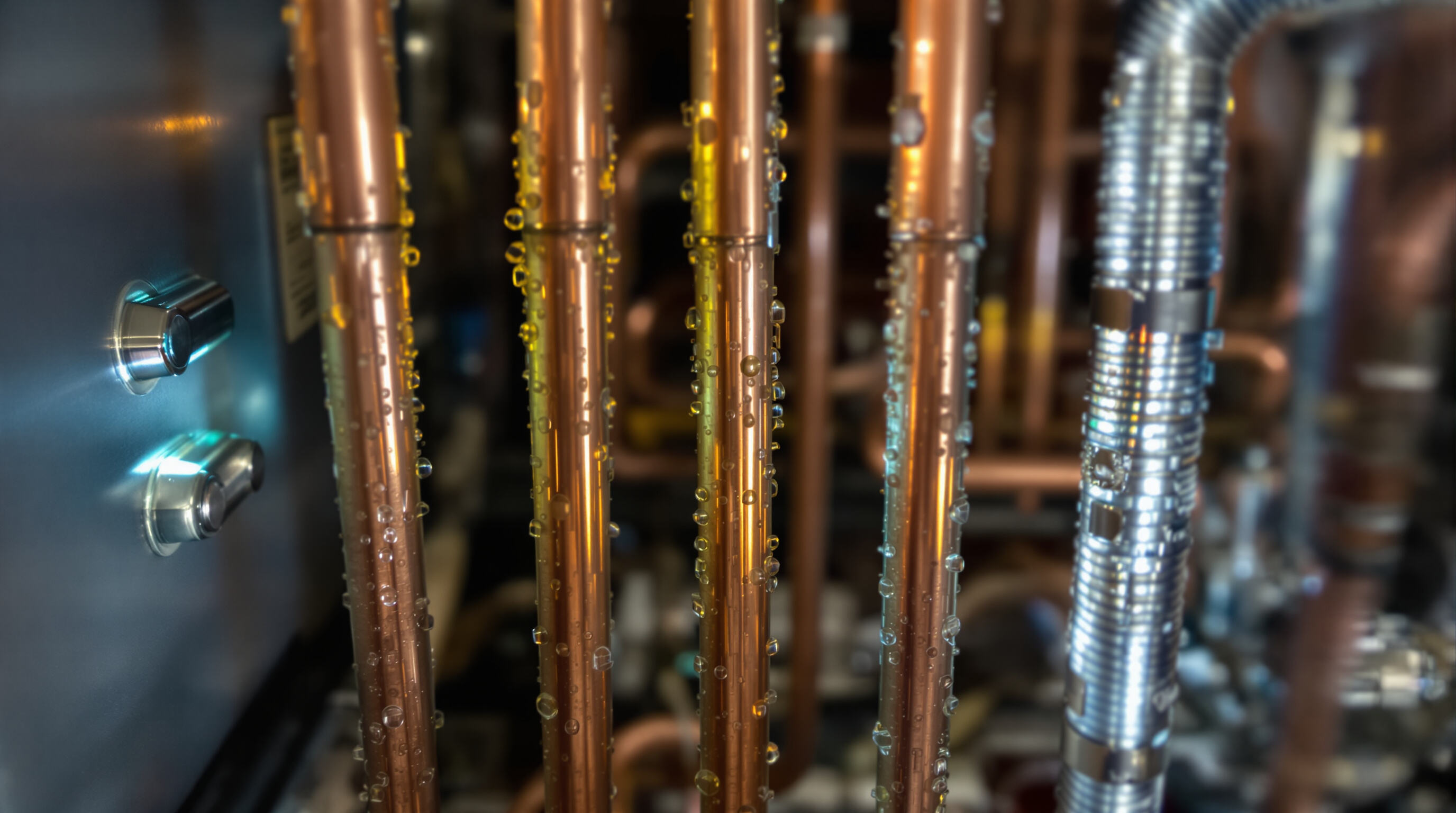
The capillary tube found in air conditioners serves as an important part of HVAC systems, sitting right between the condenser and the evaporator unit. What this component does is control how much refrigerant flows through by causing a pressure drop effect. This process turns high pressure liquid refrigerant into something with lower pressure before it gets to the evaporator section. Since there are no moving parts involved, the fixed shape of these tubes makes them pretty dependable compared to other options like expansion valves, plus they tend to be cheaper too. Take for instance a common capillary tube measuring around 0.031 inches in diameter. Such a size generally cuts down pressure levels by roughly half under normal working conditions, which helps maintain steady refrigerant flow throughout the system.
The way refrigerant moves through those tiny capillary tubes follows basic thermodynamic principles we all learned about back in school. When there's a pressure drop from the condenser side to the evaporator side, something interesting happens with the refrigerant as it changes state. Liquid refrigerant actually soaks up hidden heat while expanding, which is pretty cool if you think about it. As the refrigerant travels through these narrow passages, friction creates heat along the way. This causes a noticeable drop in enthalpy somewhere around 120 to maybe even 150 kJ per kilogram in most standard systems. All these factors work together to keep heat moving efficiently through the system and help maintain stable operation even when demand fluctuates throughout the day.
| Tube Length | Inner Diameter | Pressure Drop | Mass Flow Rate |
|---|---|---|---|
| 1.5 m | 0.8 mm | High | Low |
| 2.2 m | 1.0 mm | Moderate | Medium |
| 3.0 m | 1.2 mm | Low | High |
The shape and size of capillary tubes really matters for how well a system works. Longer tubes create more resistance against fluid flow, whereas bigger diameter tubes let more stuff pass through. Some tests done on tubes measuring 0.5 mm versus 1.5 mm showed that those wider ones had about 63% better flow capacity when everything else stayed the same. Getting the right size is all about finding that sweet spot between too little and too much. If it's too small, the evaporator gets starved of refrigerant. Too big? The compressor ends up flooded, which nobody wants. Technicians spend hours calculating these things because getting it right means the difference between an efficient HVAC system and one that wastes energy and breaks down faster.
The temperature of refrigerant entering a system plays a big role in how well capillary tubes work because it changes how thick the refrigerant is and how it transitions between states. When the inlet goes up by about 12 degrees Celsius, the viscosity of R410A drops around 18%. This makes the refrigerant flow faster through the tubes but actually weakens the pressure difference required for proper heat transfer. Looking at actual data from commercial HVAC installations shows something pretty important too. Systems where the inlet temps don't match what they should be end up losing as much as 23% of their cooling power according to recent studies published by ASHRAE back in 2023. That kind of loss adds up over time for building operators trying to maintain comfortable indoor conditions.
When copper capillary tubes heat up, they actually expand around 0.017% for every 10 degree Celsius rise in temperature. This expansion causes the inside diameter to shrink roughly 0.008 millimeters, which creates problems for fluid flow. The issue becomes really noticeable when ambient temperatures go above 45 degrees Celsius. According to research published last year on refrigerant flows, coiled tube arrangements handle these temperature related issues much better than straight ones. Tests showed that coils reduce flow variations from thermal changes by about two thirds compared to traditional straight tubes, making them a smart choice for systems dealing with significant temperature swings.
R407C exhibits 31% greater volumetric flow variation than R410A when ambient temperatures fluctuate between 20°C and 40°C. Partial load operation intensifies this effect, with capillary tubes in variable-speed compressors experiencing 2.7 times more mass flow oscillation than those in fixed-speed systems.
As temperatures climb past 35 degrees Celsius, flow resistance doesn't just go up it actually accelerates, increasing about 42% faster for each additional degree. Why does this happen? Well, several factors come into play when things get hot. First, turbulence starts kicking in once Reynolds numbers pass around 2,300 mark. Then there's this whole thing with flash gas forming right in the middle parts of tubes. And let's not forget how surface roughness builds up over time. Lab experiments have consistently shown something interesting too. When temperatures fluctuate by 10 degrees, the system's performance varies nearly 19% more compared to similar changes in pressure alone. This really highlights just how sensitive these tiny capillary tubes are to even small temperature variations during operation.

The performance of R22, R407C, and R410A varies significantly in capillary tube systems because of their different properties like viscosity, density, and latent heat characteristics. When tested at around 45 degrees Celsius ambient temperature, studies from Kim and colleagues back in 2002 showed that R22 actually moves about 12 to 18 percent more mass through identical tubes compared to R407C. But there's another side to this story. R410A manages to deliver roughly 15 to 22 percent better heat transfer efficiency than good old R22 even though it flows about 8 to 10 percent slower by volume. This makes R410A a popular choice for newer systems despite needing higher operating pressures. Recent research published in 2022 highlighted another issue with R407C though. Its temperature glide creates a small but noticeable efficiency drop of about 4 to 7 percent in fixed-orifice systems when compared against single component refrigerants, something technicians need to keep in mind during system design and maintenance.
The way different refrigerants perform changes quite a bit when temperatures go up and down. Take for example what happens at around 30 degrees Celsius condensing temperature. R410A keeps things pretty steady with just about plus or minus 3 percent variation in flow rate. But R407C tells a different story because of its zeotropic nature, showing much bigger swings of around plus or minus 9 percent. When we look at low load conditions where ambient temps drop to 15 degrees Celsius, problems start popping up for R22. Its lower critical temperature means flash gas forms earlier than desired, which cuts down on cooling capacity by somewhere between 14 and 19 percent compared to what R410A can deliver. Interestingly enough, there's actually a model developed back in 2003 by Choi that does a pretty good job predicting all these non-linear behaviors. The predictions line up with actual measurements about 88 to 92 percent of the time across operating ranges from 20 to 55 degrees Celsius, though nobody claims it's perfect in every situation.
Retrofitting R22 systems with R410A requires capillary tube resizing to accommodate 40% higher operating pressures. Data from 85 retrofit projects show undersized tubes lead to:
Using thermodynamic simulation tools for recalibration reduced these inefficiencies by 63% in optimized cases, according to ASHRAE 2023 retrofit guidelines.
Straight capillary tubes tend to maintain better refrigerant flow stability when temperatures rise because they have consistent cross-sections throughout their length. Tests show these straight designs experience around 15 percent fewer pressure drops compared to coiled alternatives during thermal stress testing. The simple straight path reduces turbulence problems that often occur in coiled tubes once ambient temps hit about 95 degrees Fahrenheit or higher. Sure, coiled models take up less room, but the bends create extra resistance as fluid moves through them. This increased friction actually cuts down on mass flow stability somewhere between 8 and 12 percent in those really hot conditions according to various HVAC system simulations conducted over recent years.
Getting the right balance between diameter and length is really important when designing capillary tubes, especially considering how materials expand when heated. Most engineers find that tubes around 0.03 to 0.05 inches wide work pretty well, with lengths typically ranging from about 12 feet up to 20 feet long. These dimensions tend to hold up across pretty much all weather conditions we see in normal operations, from cold winter mornings at around 40 degrees Fahrenheit right up to summer heat reaching 115 degrees F. Today's designers are starting to incorporate artificial intelligence into their simulation tools which helps predict how tubes might deform under different temperatures. This allows for smarter decisions about wall thickness adjustments so that fluid flow stays consistent within roughly plus or minus 3 percent even during those extreme temperature swings between seasons.
The use of dynamic modeling has made it possible to predict how capillary tubes perform when temperatures change around them. According to some research published last year, computer simulations called CFD can actually predict refrigerant flow issues pretty accurately, usually within about 5% of what happens in real tests. What makes these models so good is that they take into account things that really matter in practice, like when refrigerants switch between liquid and gas states, plus how copper tubes expand slightly with heat - roughly 0.02 millimeters per degree Celsius. This kind of detailed approach helps engineers create better designs especially for those tricky applications where precision matters most.
Machine learning is transforming capillary tube optimization by analyzing decades of operational data. A 2024 industry report found AI-generated designs reduce energy consumption by 12–18% compared to conventional methods. However, engineers must validate AI outputs against physical testing, particularly for extreme conditions outside standard operating envelopes.
Leading manufacturers are adopting temperature-responsive capillary systems featuring:
This adaptive strategy maintains consistent cooling output despite ambient swings up to 25°C, outperforming fixed-design tubes by 19% in ASHRAE stress evaluations.
 EN
EN



 Hot News